
 Enterprise
How Enterprise Brands Can Scale Marketing with Data, Automation, and Digital Strategy
For a global brand, the challenge isn't just reaching more people; it's reaching the right people with a consistent message across dozens of channels, hundreds of regions, and millions of touchpoints. When you operate at this level, manual processes don't just slow you down; they create a "complexity tax" that erodes your ROI.
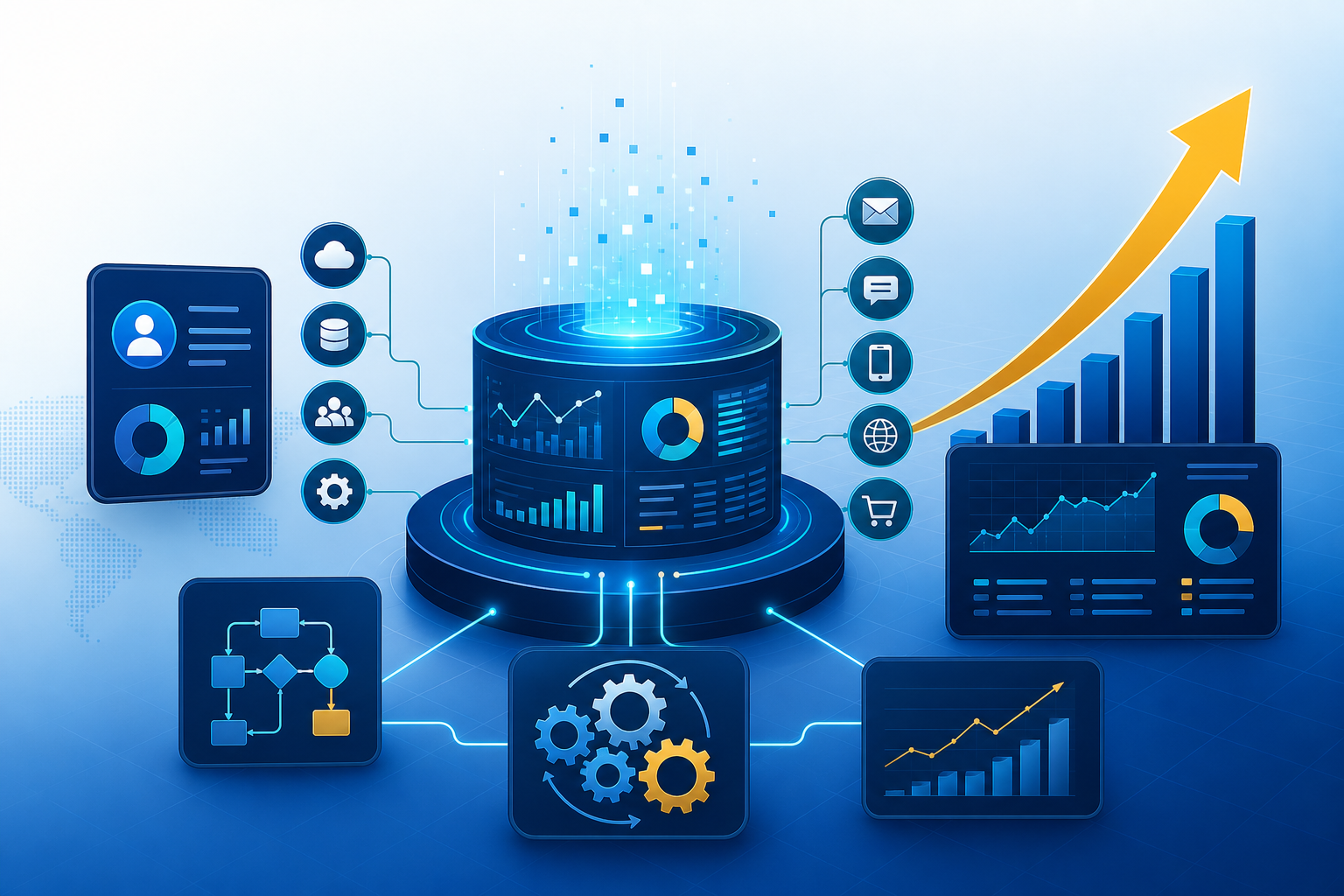
To win in the modern market, enterprise leaders must shift from reactive campaigns to a proactive ecosystem powered by data, fueled by automation, and guided by a sophisticated digital strategy.
Here is the blueprint for scaling enterprise marketing in the age of intelligence.
1. Building a Unified Data Foundation
Data is often called the "new oil," but for many enterprises, it's more like a "data swamp." Information is trapped in departmental silos — sales have one view, marketing another, and customer support yet another.
The Single Source of Truth
To scale, you must move toward a Customer Data Platform (CDP). A CDP aggregates first-party data from every touchpoint, creating a unified customer profile.
- Why it matters: When your data is unified, you can stop "guessing" and start "knowing." You move from broad demographic targeting to precise behavioral targeting.
- The SEO Angle: High-quality data allows for better intent-based content creation, improving organic search relevance and lowering bounce rates.
Predictive vs. Reactive Analytics
Scaling requires looking through the windshield, not the rearview mirror. Enterprise brands are now using AI-driven predictive analytics to forecast customer lifetime value (CLV) and churn probability. By identifying which segments are most likely to convert before they enter the funnel, you can allocate your budget with surgical precision.
2. Leveraging Automation to Multiply Output
At the enterprise level, "doing more with less" is a fallacy. The goal is to do more with more efficiency. This is where marketing automation transforms from a luxury to a necessity.
Orchestrating the Customer Journey
Marketing automation is no longer just about scheduled emails. It's about omnichannel orchestration.
- Dynamic Creative Optimization (DCO): Automatically swapping elements of an ad (images, headlines, CTAs) based on who is viewing it.
- Trigger-Based Workflows: Delivering a specific whitepaper or discount code the moment a lead interacts with a specific high-value page on your site.
Content Scaling with AI
The demand for content is insatiable. Automation and Generative AI allow enterprise teams to create "base" content and then automatically repurpose it into social snippets, email copy, and translated versions for regional markets. This ensures your brand voice remains consistent while your volume increases tenfold.
3. The Digital Strategy: From Campaigns to Ecosystems
A common mistake at the enterprise level is thinking in terms of "campaigns" (start and stop dates). To scale effectively, you must build a digital ecosystem that runs 24/7.
The Power of Agile Marketing
Borrowing from software development, Agile Marketing allows enterprise teams to work in "sprints." Instead of a six-month planning cycle for one massive launch, teams run continuous A/B tests, learn from the data, and pivot in real-time. This reduces the risk of expensive failures and ensures the strategy evolves as fast as the market does.
Moving to a Full-Funnel Omnichannel Approach
Scaling isn't just about the top of the funnel. A sophisticated digital strategy integrates:
- SEO & Content: Capturing intent at the awareness stage.
- Paid Media: Scaling reach through lookalike modeling.
- Retention Marketing: Using automation to keep existing customers engaged, lowering the cost of acquisition (CAC).
4. Overcoming the "Human" Hurdle: People and Process
Technology is only as good as the people operating it. Scaling marketing requires a cultural shift within the organization.
- Breaking Down Silos: Integrated marketing requires close collaboration between IT, Data Science, and Creative teams.
- Upskilling: As automation takes over rote tasks, your team must move from "execution" to "strategy and oversight."
- Governance: Scaling requires guardrails. Establish clear brand guidelines and data privacy protocols (GDPR, CCPA) to ensure that as you move faster, you don't move into legal or brand-safety risks.
The Bottom Line
For enterprise brands, the ability to scale is the ability to out-pace the competition. By unifying your data, leveraging the power of automation, and executing an agile digital strategy, you transform your marketing department from a cost center into a high-velocity growth engine.